
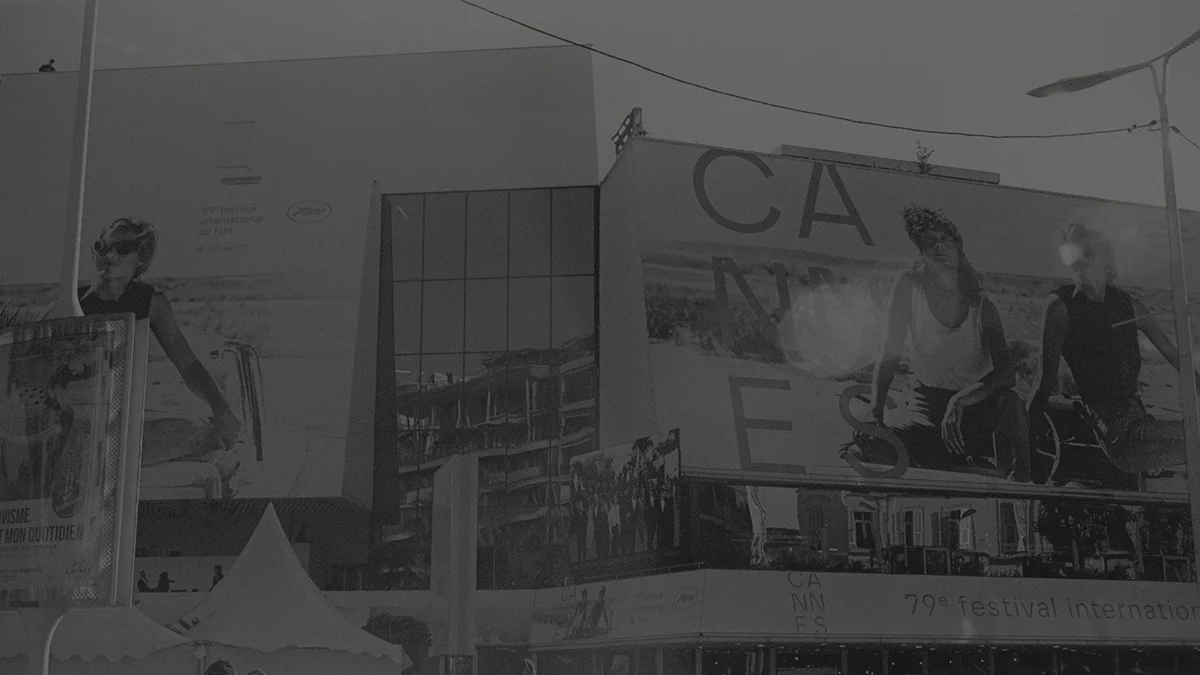
Katie's Cannes Diary
Author: Katie McElligott Ryan
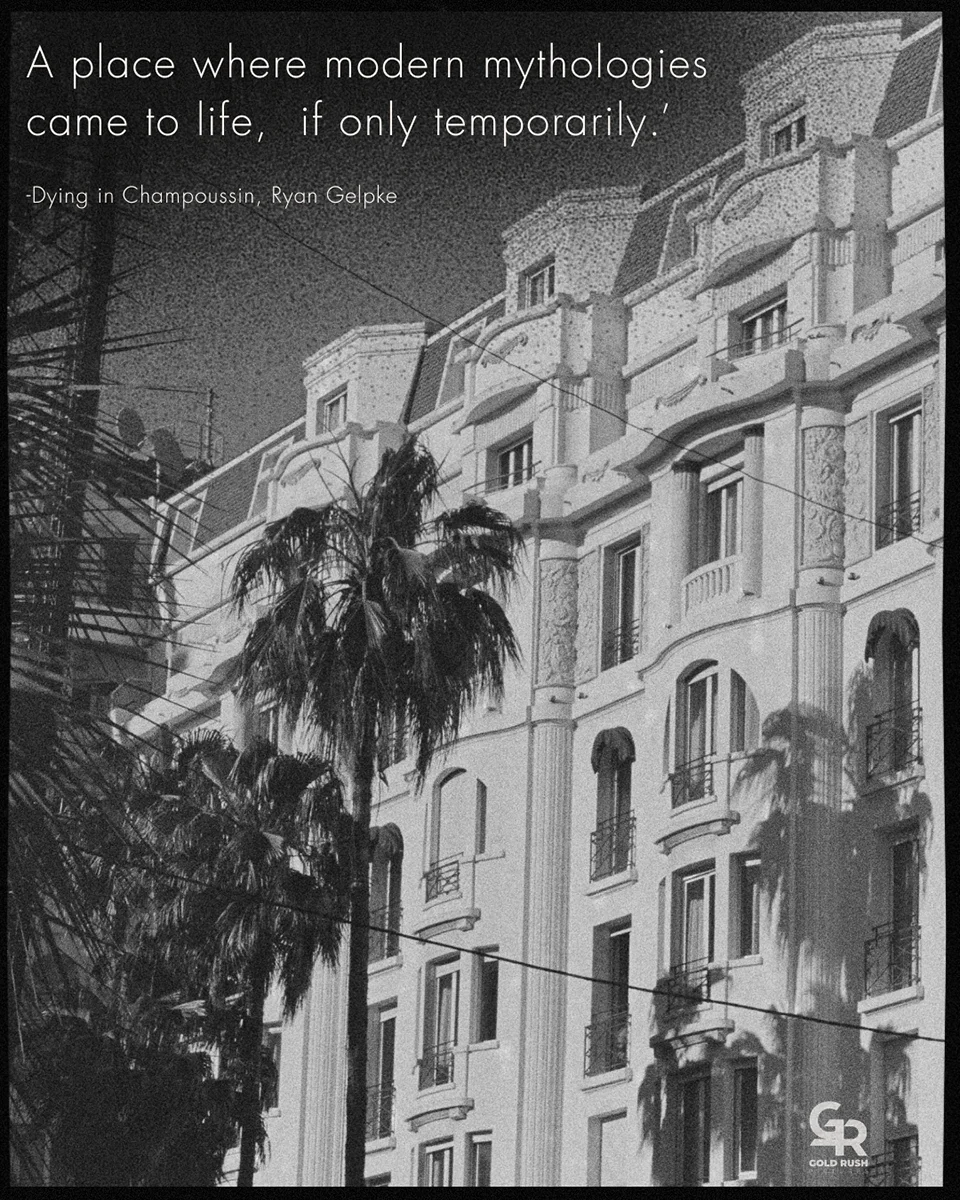
I was lucky enough to spend part of my childhood growing up on the French Riviera, in a sleepy town, snoozing in the jagged hills above the coast. My horizon filled with the glistening mediterranean sea, palms trees and the mythical silhouette of Cannes below.
Admittedly, as a three-year-old, the thing that intrigued me the most on the infamous La Croissette was Le Grand Carrousel. My beloved Carrousel remained immortalised long after my années françaises… Home in Ireland, I cherished an ornate replica, which when wound, played a tired lullaby as its tiny golden horses did their perpetual laps.
And amid my daily pilgrimage up and down the festival boulevard this May, after all these years, we reunited again: me and Le Grand Carrousel. This sacred emblem of childhood, once filtered through hazy memory, now stood before me as something far more tangible - almost ceremonial, an object through which these Canne’s mythologies revealed themselves.
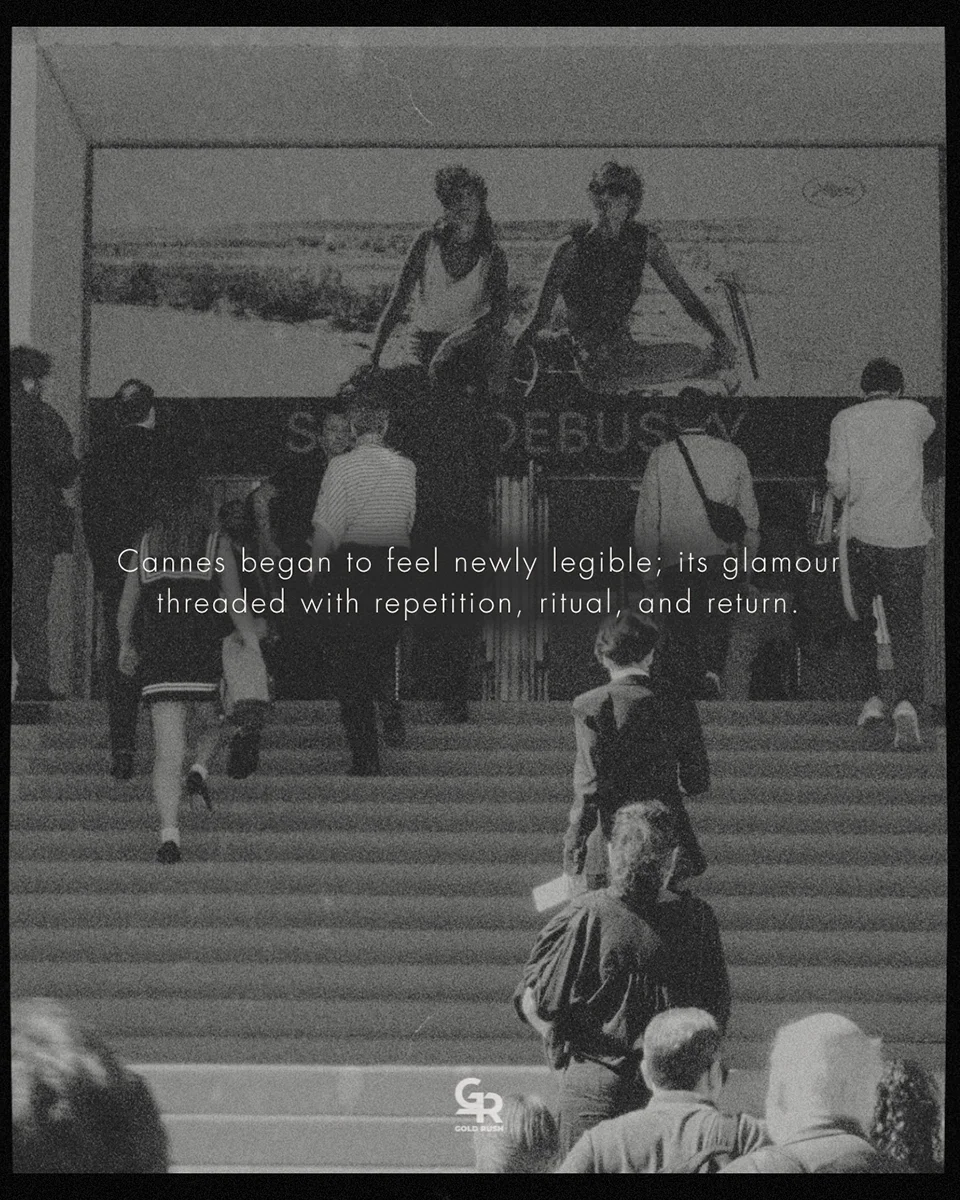
Cannes began to feel newly legible; its glamour threaded with repetition, ritual, and return.
I arrived in Cannes as a Development Assistant for Gold Rush Pictures, moving between screenings, industry meetings, and conversations with filmmakers, across a slate of international projects, and emerging talent initiatives. By the time my flight departed London on the 14th of May, the guessing game had already begun. Who among the passengers was festival bound - and who was just travelling South desperate for some sunshine?
There were clues everywhere: camera bags tucked beneath seats, dog-eared novels folded open at cinematic passages, takeaway coffee cups, the occasional seventies facial hair.
The flight itself began to feel symbolic.
On board was, a temporary congregation of filmmakers, producers and accidental collaborators, all moving toward the Riviera as though summoned there. Everyone travelling, anticipating the same shimmering mirage. It struck me during the safety announcement; that if this plane were to fall from the sky, maybe this unlikely assembly would pull-together and produce a breathtaking documentary from the wreckage.
We cannot save lives, but the art of filmmaking permits at least these stories to survive. The landing in Nice came hard and sudden, jolting snoozing passengers awake- before the cabin doors opened onto warm Mediterranean air thick with petrichor.
Even at midnight, the South of France carried its familiar perfume - sea salt, stone, hot petrol and tobacco. A missing apartment key left the first night unfolding not beneath chandeliers or flashing cameras but stranded on a street curb. I felt at home, scanning the residential streets I had not tread in years- this was the Cannes I knew. Neighbours and filmmakers drifted into conversation. They pitied the spectacle before them; a flushed, frazzled Irish young woman, with bundles of bags. Fragmented French returned instinctively.
I learnt that Cannes reveals itself quickly through moments like these: exhaustion, improvisation, coincidence.
My entry was granted.
My interactions with these fellow filmmakers made my whole accommodation predicament feel less accidental and more fated. Our collective reasons for attendance were removed temporarily; I was simply a person in a familiar predicament. Before sleep, emails and project notes were reread beneath dim lamplight, as though preparing for an examination in cinema itself.
My first morning arrived opened to a soundscape unique to the festival season: car horns, gulls, rolling suitcase wheels and multilingual chatter ricocheting across the Croisette. Along the promenade, accreditation queues formed beneath Riviera sun, in what felt less like an entrance and more like a temporary nation state for filmmakers. Every café table appeared occupied by someone negotiating rights, discussing edits or recovering from the previous night’s premiere. Meetings dissolved into lunches; lunches into interviews; interviews into beach conversations stretching toward sunset.
Meanwhile, the machinery of the festival moved relentlessly on.
Inside the Marché du Film tents, countries transformed themselves into miniature cinematic embassies. Germany hosted beachfront interviews beneath white canopies. Ireland offered a familiar humour. Elsewhere, producers pitched dystopian thrillers beside champagne buckets, while publicists guided actors through carefully choreographed interviews, metres from tourists photographing yachts.
Then, suddenly, chaos.
Crowds surged for a major premiere along the Croisette, some begging for tickets, others pressed against barricades hoping to glimpse gowns sweeping across red carpets. Press photographers frantically initiated a clown-like routine of erecting their ladders along the red carpet.
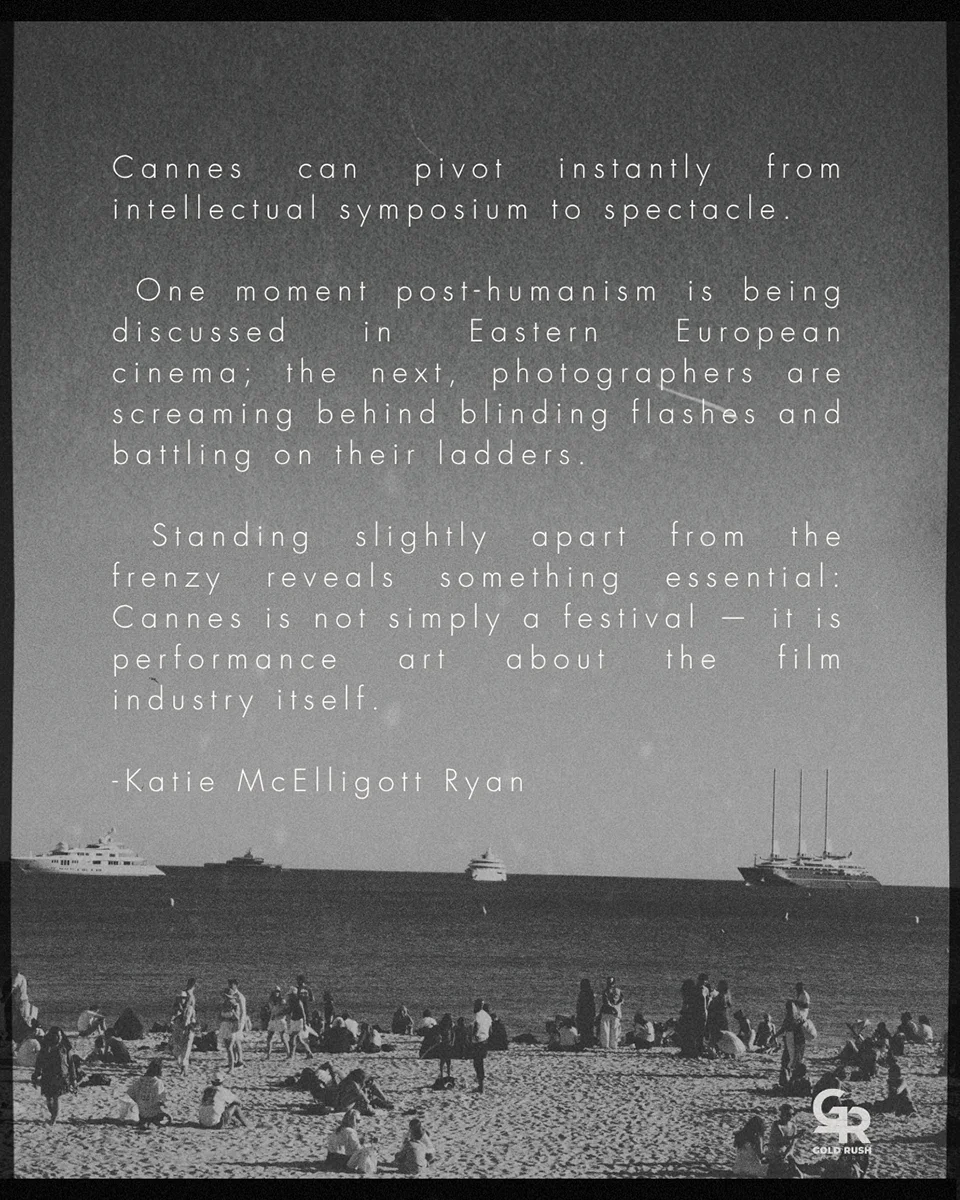
Cannes can pivot instantly from intellectual symposium to spectacle. One moment post-humanism is being discussed in Eastern European cinema; the next, photographers are screaming behind blinding flashes and battling on their ladders. Standing slightly apart from the frenzy reveals something essential: Cannes is not simply a festival - it is performance art about the film industry itself.
Later, aboard the ATRE awards venue for our Golden Egg awards, emerging Berlinale Talent filmmakers gathered shoulder-to-shoulder, discussing future projects while perched on the smooth blue water. Introductions from Feo Aladag, Lota Dascioraite and Tom Tykwer carried the tone of gentle invitation; welcoming young directors into an industry, where their idiosyncratic projects were celebrated.
Three filmmakers from three different continents. A Documentary, an Animation and a Feature. Unified by their urgency to create and palm guarded Golden Egg in hand.
‘Praemium palma victor’i - “the palm is the prize of the winner” - traces back to Saint Honorat’s legend and the founding mythology of the abbey on the Îles de Lérins. Prestige here is never just institutional; it is folkloric and a fitting source for the myths themselves. We head to Palm Beach restaurant, in a herd of Ubers, the building engulfed in tangerine light, the refulgent stairway marking the end point of the infinite promenade. Until a feast of provincial delicacies, wine and live Spanish music a permitted us to roll home.
By the third day, exhaustion has become collective. At breakfast, filmmakers compare schedules with hollow laughter and bloodshot eyes. “No Cannes is ever the same,” someone says, though everyone recognises the same expression: equal parts depletion and wonder.
At Café Roma, meetings unfold back-to-back, while screenwriters lean over scripts as though guarding confessions. The atmosphere resembles speed dating for art; some love affairs, some marriage and others a crippling Irish goodbye. And everywhere, absolutely everywhere. Cannes expands beyond its official geography. Apartments become boardrooms. Beaches become screening rooms. Hotel terraces become networking salons. No space remains untouched by the festival’s gravity. In the midst of all this, there are quieter anchoring points.
In a crimson brasserie, I caught up with Director Marcel Beltrán (Golden Egg Award recipient) & Producer; Paula Gastaud. Our conversation stretched far and wide; Art, documentary, music, identity; I could understand why these were all friends to Beltrán & Gaustad. No subject is off the table, when you are fortunate enough to be in the company true artists. Intervals of laughter chimed into the flow of our stories, as Paula noticed her pint glass (filled with water) read ‘El ron de Cuba’; a nudge to Marcel’s background and subsequent location of their Award-winning Development. I curiously asked the name of the song which a giddy Spanish band played for us on request at Palm Beach restaurant. ‘El cuarto de Tula’ he replied with a grin, ‘a Cuban folk song’; a fiery and romantic declaration. A very appropriate soundtrack for Canne’s fantasy, indeed.
The pair kindly invited me to a Brazilian event, where I notably tried my first caipirinha, surrounded by old friends reuniting, laughter and spilled drinks. We stood back and observing the joyful chaos of it all. Elsewhere, as evening struck; beach drinks turn electric - part celebration - where industry optimism and fatigue blur into the same sentence, eventually permitting my send-off home.
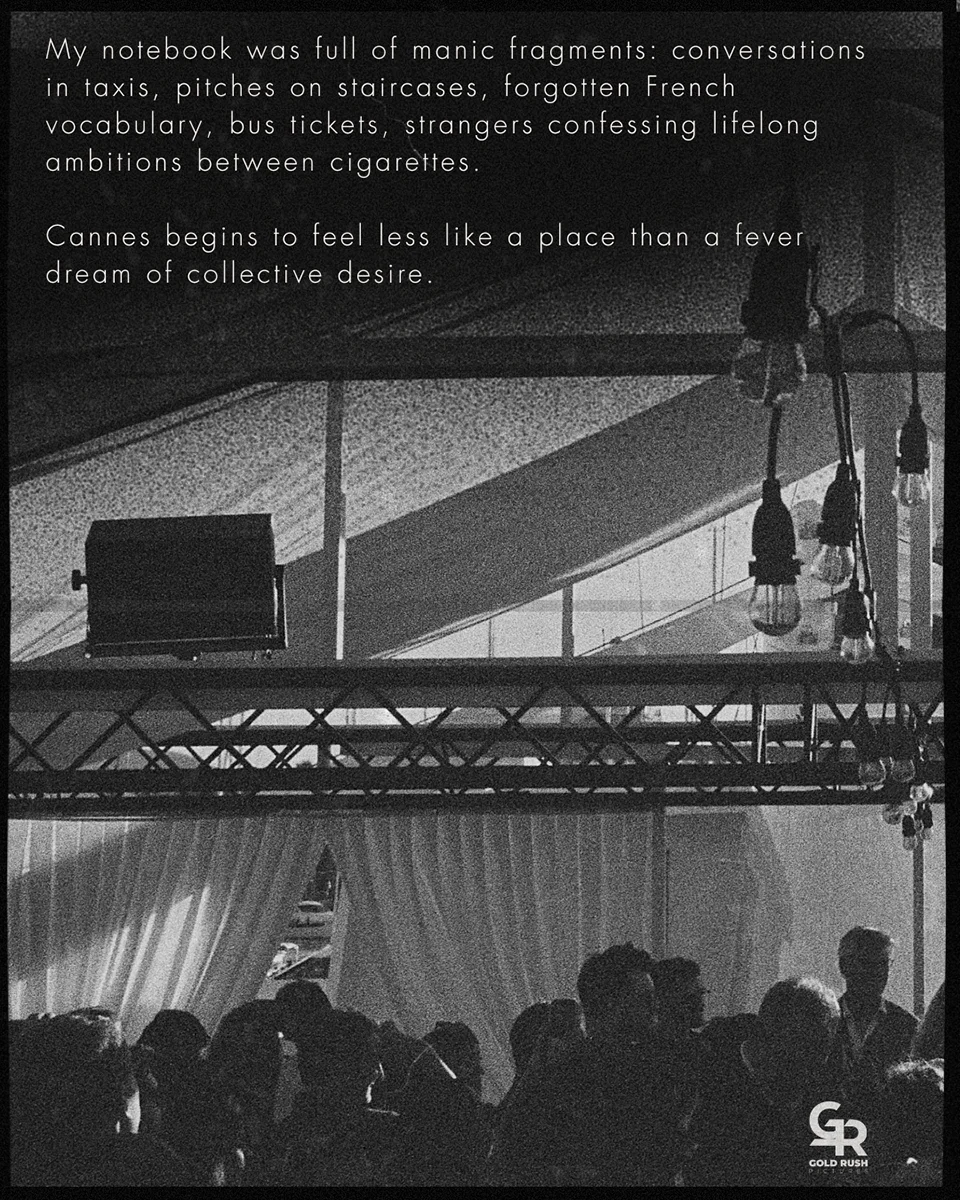
On the final day, my notebook was full of manic fragments: conversations in taxis, pitches on staircases, forgotten French vocabulary, bus tickets, strangers confessing lifelong ambitions between cigarettes. Cannes begins to feel less like a place than a fever dream of collective desire. Returning to London brought an unexpected emotional shift. A call home drifts into childhood memory - carousel rides, beaches, family summers.
I rang my mother, rather than updating her on my cinematic extravaganza. I longed for an update on my Carousel- in the hopes to relocate that treasure to my London flat. Then comes the news that my childhood Carousel, once carefully preserved, has finally been thrown away after years of repair. The horses had snapped; the mechanism no longer turned. The loss lands softly- but precisely – a dignified allegory.
Perhaps because Cannes itself operates in the same way: a rotating illusion sustained only through maintenance, belief and repetition. Fragile things survive only as long as someone continues to tend to their demands, to polish them- to wind them. And still, despite everything - the exhaustion, the chaos, the surreal intensity - the call to return is immediate.
That is Cannes’ enduring seduction. It leaves you overwhelmed, slightly unmoored, and already imagining the next time the melody sounds, and the carousel begins to turn again.
%20Lead%20Images06%20(1).webp)
