
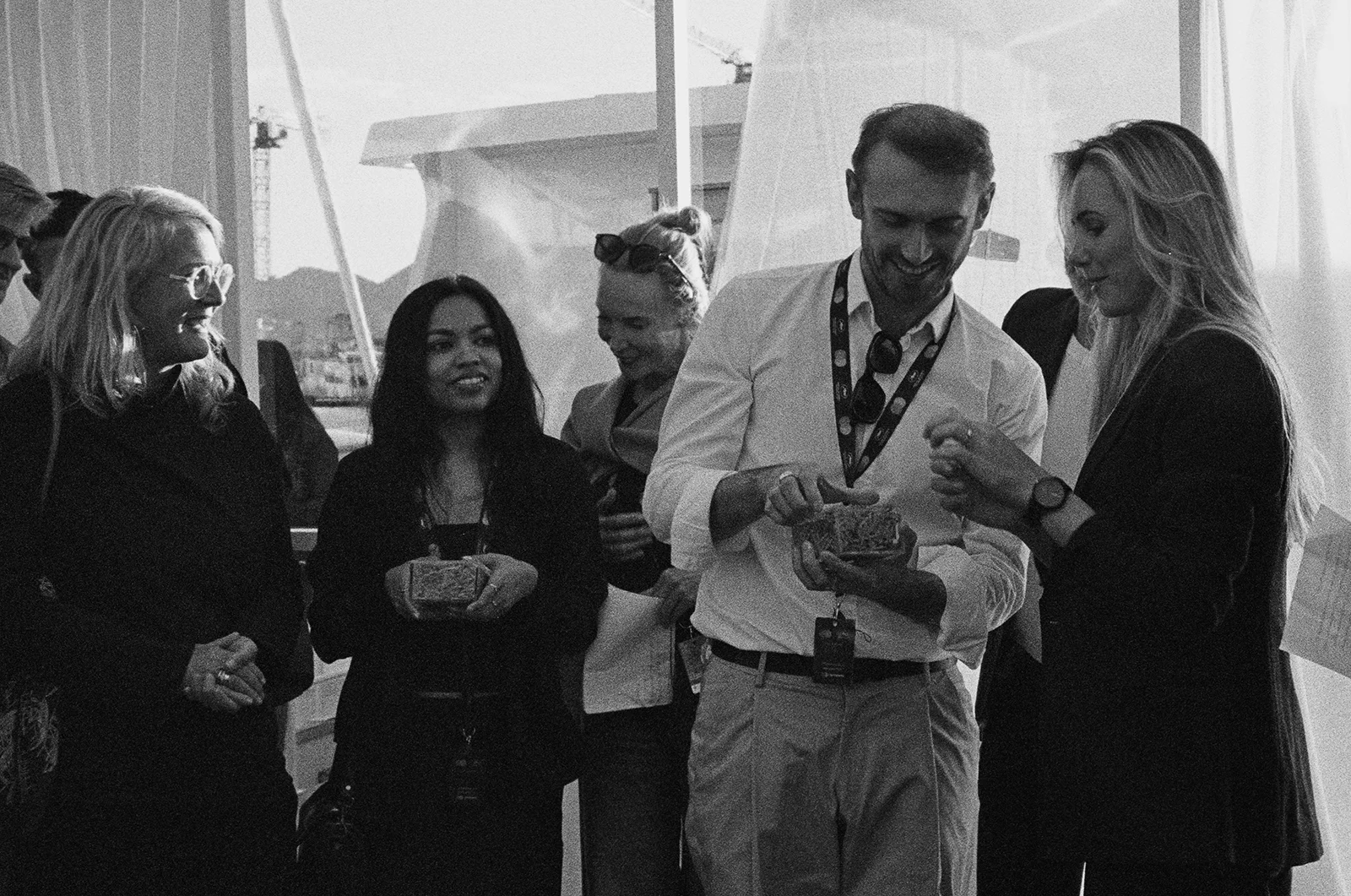
The Inaugural Golden Egg Award Winners’ Interview

Story and photographs: Katie McElligott Ryan. Poster designs: Hyunji Park
Conversations with Marcel Beltrán, Subarna Dash and Aliaksei Paluyan on attention, collaboration and the endurance of bringing a development into fruition.
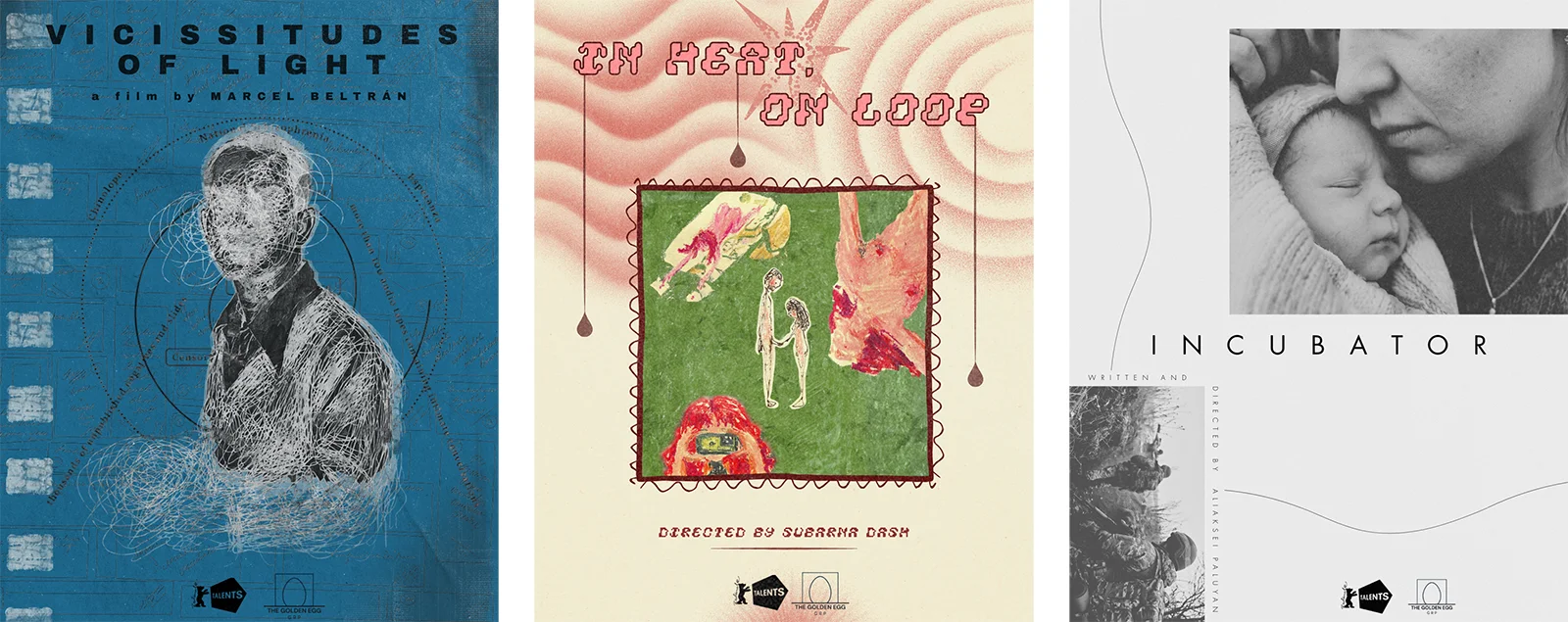
The lights have long since dimmed on yet another Cannes Film Festival. However, for the inaugural Berlinale Talents X Gold Rush Picture Golden Egg Award Winners, there is no real sense of closure only beginning. I was lucky enough to catch up with each of the winners; Marcel Beltrán, Subarna Dash and Aliaksei Paluyan.
Each of these developments captivated the jury and redefined the necessity of this award; to be a stepping stone and open door for emerging filmmakers. Their projects: Vicissitudes of Light (Marcel Beltrán), In Heat, On Loop (Subarna Dash), Incubator (Aliaksei Paluyan) despite belonging to different continents of form and sensibility, mutually orbit a familiar condition: cinema as long-duration attention, as something accrued slowly against the wider battle of production capabilities VS the modern viewer’s demand.
I have found that what binded each conversation with the filmmakers, was not theme, nor even purpose, but their attention. I had the overwhelming sense that each production has been carried for years in varying states of stability and solitude, refined not through a singular epiphany but through endurance, through the silent pressure of time passing, and tormenting you with its lack of resolution. To speak with and witness these exceptional filmmakers is to watch a fruit bud, flower and approach its ripening. Nothing feels permanent; nothing quite arrives. Instead, lingers a curious tension where form and story remain porous, still open to critique and consideration. And yet, even in this unfinished state, something harmonises: a common refusal of immediacy, and a belief in cinema as a practice of attentive observation at people, at memory and the intricate architectures of the human experience which resist easy translation into image or story.
‘Cinema truly flourishes when you find the right partners…leaving behind the solitude to collaborate with creative minds and producers who share this sensibility and strengthen the work.’
-Marcel Beltrán
On opening this discussion with the recipients it felt instinctual that each conversation returned, to the shared nebula, from which these projects emerged; In Berlinale Talents Lab, these projects are held in a gentle buoyancy, and nudged toward the perspectives of mentors, producers, and other collaborators, as though authorship is being allowed to breathe for a momentarily whole, but uncertain interval.
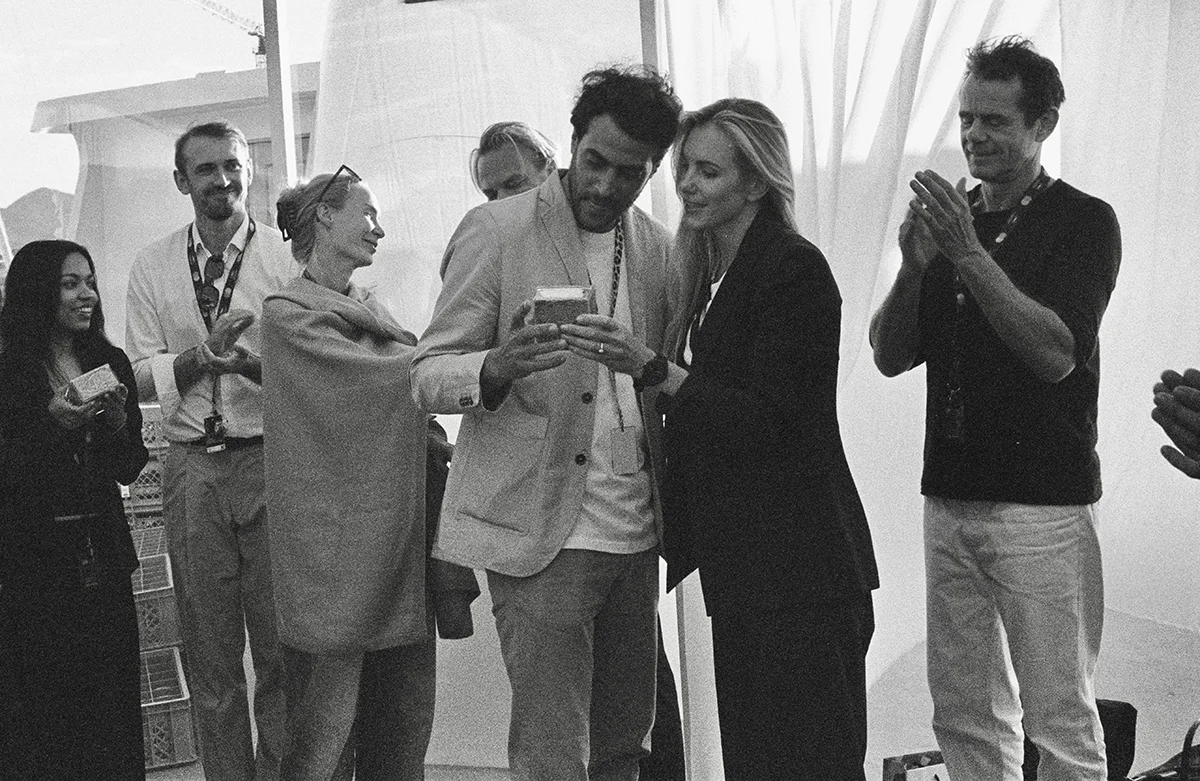
For Subarna Dash, this breath arrived as a welcome reprise from the solitary world of animation. Her development In Heat, On Loop explores an angsty battle desire, ambition and constraint, its own making shaped by a similar unwavering patience and determination.
“Writing is usually quite a solitary process, and animation filmmaking can make it even more isolating. What I really valued about Berlinale Talents was the sense of community it created. I was surrounded by projects I deeply admired, and it became an incredibly enriching space to learn from one another while collectively developing our work.”
In Heat, On Loop feels entirely inseparable from its attentiveness. Constructed through mixed media animation, the project is where craft becomes the subject as well as the method. Every frame bares the labour, each character ridden with allegories and emotional weight, far beyond the immediate narrative function. Dash graciously demonstrates her character’s construction not as literal devices but embodiments of female desire, frustration and playfulness. The animation project’s marriage of Indian culture, Girlhood, desire and mixed media, all mutually contribute to Dash’s world feeling new, exciting and necessary to explore.
“I want to tell a story about female desire and ambition in a patriarchal setting in a way that feels new to me. Working in mixed-media animation, which is still relatively niche in India, I’m drawn to building a visual language that is unique and expressive. The film approaches desire through humour, allowing it to be playful, uncomfortable, and honest at the same time.”
-Subarna Dash
Where Dash speaks of community as a counterweight to artistic solitude. Aliaksei offers new insight, highlighting the importance of networking and mentorship as intrinsic aspects of the Berlinale Talents Lab:
“Ultimately, it's more about networking and having the opportunity to review the dramatic structure of your screenplay with a mentor”.
Aliaksei’s Incubator carries the process of refinement into a deeply personal and prestigious drama. Through its protagonist Maria, the script gives form to experiences often forgotten in the shadows of larger political narratives.
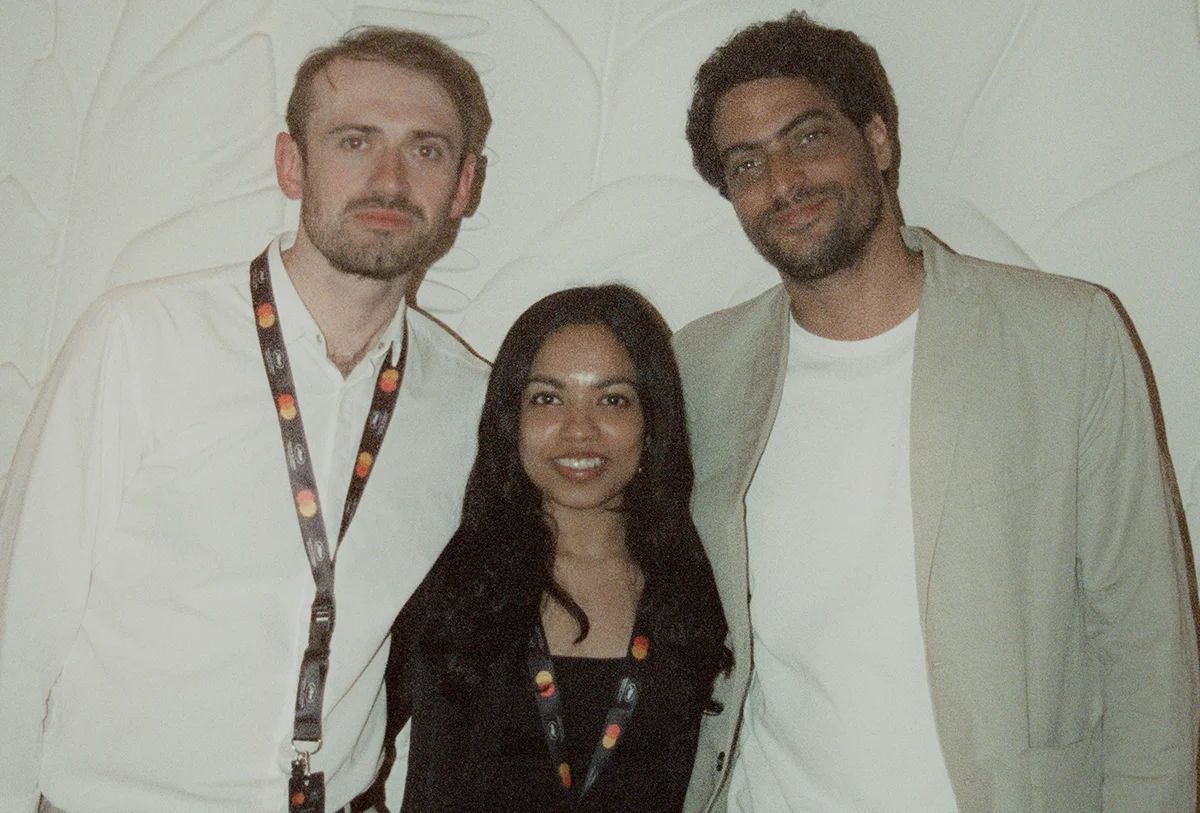
Rather than approaching a discourse on conflict through scale and in turn abstraction, Paluyan narrows his focus to the intimate scale of one family, one woman and an impossible set of choices.
“She not only fights for survival but also struggles to hold on to her humanity.”
-Aliaksei Paluyan.
The power of Incubator lies precisely in this refusal of abstraction and distance. War is not rendered as an Epic or historical summary, but as something painstaking real, that Maria lives through her own body. As we fix on Maria, we are mutually unable to detach ourselves from the realities of her struggle; allowing larger histories to emerge through the evocative texture of individual experience. Beltrán speaks of a similar process but through another thought-provoking insight. For 15 years, Vicissitudes of Light existed largely in solitude, carried forward and carefully nurtured through a sustained relationship between Marcel and his material. “For a long time, I have been developing this project in complete solitude. The process had become a kind of intimate companionship, a silent listening”.
This language of listening feels runs through the veins of Marcel’s artistic identity and is intrinsic to understanding the project itself. Vicissitudes of Light, embodies a mode of filmmaking increasingly at odds with contemporary expectations of speed and visibility. The scale of the undertaking is difficult to grasp: the project already in its high school years. What remains most striking is not its duration alone, but the patience required to endure this uncertainty for so long.
For Beltrán, the significance of The Golden Egg Award extends beyond the recognition. It represents an affirmation that this slower, attentive labour of filmmaking still has its rightful place within a more commodified contemporary cinema.
“Receiving this specific award carries enormous weight because I know it comes from the support of a company like Gold Rush Pictures,” he explains. “It shows that there are visionary producers willing to support handmade cinema in the age of algorithms and endless Instagram carousels. It gives us the strength to know that patient, intimate work also has a fundamental place on the international scene.”
“In the current climate, as the independent film industry faces increasing challenges, every award represents not only recognition but also a new opportunity for an emerging filmmaker”- Aliaksei Paluyan
The term “handmade cinema” feels especially significant across all three projects, which is a rarity considering the current industry climate of “increased challenges” as noted by Paluyan. Though these productions remain radically different in form & subject matter, each filmmaker is committed to a practice of storytelling that is grounded in attention. Dash's exploration of female desire through mixed-media animation, Paluyan's portrait of Belarusian resilience, and Beltrán's meditative examination of memory and displacement all reject easy categorisation in favour of something more intimate and enduring.
For Dash, the award represents a growing openness within international cinema towards stories that exist outside traditional industry frameworks. That desire to create space for underrepresented perspectives sits at the heart of In Heat, On Loop. Growing up, she rarely encountered portrayals of female desire that felt authentic, recognisable or complex. Much of what she saw was filtered through objectification rather than lived experience. Dash’s work seeks to challenge that legacy, approaching desire with humour, discomfort and brutal honesty.
“I only discovered films that approached desire differently much later in life… In recent years, I've come across works that portray female desire with nuance and honesty, which inspired me to explore my own perspective, grounded in my cultural context and expressed through a medium I love.” -Subarna Dash
Yet perhaps the most compelling comment from Beltrán came when I questioned him about the relationship between art and politics. At a global moment when artists are often asked to define their work through political positions/beliefs, he instead argues for the transformative power of observation, as an ethical practice.
“I try to think less about ‘History’ with a capital H, and more about the concrete world of human beings,” he says.
“I prefer to enter reality through the small door, through the crack of the everyday.” It is a philosophy that resonates across all three projects. Whether examining female desire, political oppression, migration or memory, these filmmakers approach grand themes through individual lives. Their stories do not seek to lecture or simplify. Instead, they ask audiences to look closer. As Beltrán masterfully concludes:
“I believe that truly political cinema is simply that which looks closely at people.” -Marcel Beltrán
Long after the festival has packed away, red carpets rolled up, and the ceaseless industry has already moved to its next destination, the sentiment remains, like the moral that completes a fable.The inaugural Golden Egg Award winners are not simply filmmakers to watch, they are artists committed to seeing people clearly and promoting change. In a cultural landscape dominated by acceleration, their developments offer a counter rhythm- one of attention, endurance and human connection.
This conversation, it seems, is only just beginning.